

Curaçao sits off the coast of Venezuela, outside the main hurricane belt, and is part of the Kingdom of the Netherlands. That combination explains most of what surprises first-time visitors: Caribbean weather, Dutch road signs, Papiamentu on the street and American plug sockets in the wall.
This guide covers what you arrange before you fly, what is different once you land, how to get around, and what to see. It is written for a first trip — if you have been before, most of it will be old news.
What to arrange before you fly
- The DI Card. Everyone fills in the digital immigration card online before arrival. It is free, takes a few minutes, and you will be asked for it.
- Passport and a return ticket. Both are checked. Visa rules depend on your nationality — check yours rather than assuming.
- Travel insurance. Worth having, and most accommodations here recommend cancellation cover as well.
- A car, if you want one. Book ahead in high season; the island runs out in December and in the weeks around Easter.
- Your transfer from the airport. There is no Uber on Curaçao, so either arrange a pickup or expect a taxi at a fixed rate.
Practical things on the island
Currency. Since 2025 the Caribbean guilder (XCG) has been legal tender. US dollars are accepted everywhere; euros usually are not. Cards work almost everywhere, but keep some cash for beach entrance fees and small bars.
Tap water. Safe to drink. It is distilled seawater and the quality is good, so bottled water is not necessary.
Electricity. Usually 127 volts with American-style sockets. Bring a travel adapter and check that your devices handle 110–127 volts.
Language. Papiamentu is the everyday language; Dutch, English and Spanish are widely spoken. You will get by in English anywhere a visitor is likely to go.
Time zone. Curaçao is on AST year-round and does not change clocks, which shifts the difference with Europe by an hour between summer and winter.
Getting around
Distances are short but public transport is limited, so most visitors either rent a car for part of the stay or rely on taxis for specific trips. You drive on the right. Roads in and around Willemstad are fine; some roads to the western bays are rougher, and goats are a genuine hazard at dusk.
- Rental car — the practical choice if you plan more than a couple of outings. See our honest answer on whether you need one.
- Taxis — fixed rates rather than meters. Agree the fare before you get in.
- Airport transfer — from Hato to Jan Thiel is roughly 30 to 40 minutes. Our arrivals guide walks through it.
- On foot — works within Jan Thiel, Pietermaai and the centre of Willemstad, and nowhere else.

Ten things worth seeing
- Willemstad — Unesco World Heritage, the Handelskade waterfront and the floating Queen Emma Bridge.
- Jan Thiel Beach — a sheltered bay with beach clubs, easy for a first swim.
- The Tugboat at Caracas Bay — a small wreck in shallow water, ideal for snorkelling.
- Grote Knip — the white-sand bay in the west that ends up on every postcard.
- Klein Curaçao — an uninhabited island with a long beach and an old lighthouse, a full-day boat trip.
- Playa Piskado — sea turtles around the fishing boats.
- Christoffel National Park — the island’s highest point and its hiking trails.
- Shete Boka — the wild north coast, where the swell hits the rocks.
- The Hato Caves — limestone caves with drawings by the island’s original inhabitants.
- Pietermaai — restored townhouses, small restaurants and live music at the weekend.
When is the best time to go?
Curaçao is warm all year, roughly 27 to 32 degrees, with a steady trade wind. December to April is the driest and busiest period. May, June and September are quieter and cheaper with much the same weather. October and November bring more rain, usually in short showers rather than whole days. The island lies below the hurricane belt and is rarely hit.
Where to stay
Which area suits you depends on what you want within walking distance — beach, restaurants or the city. We go through the options in where to stay on Curaçao, and compare small-scale against resort in B&B or resort.
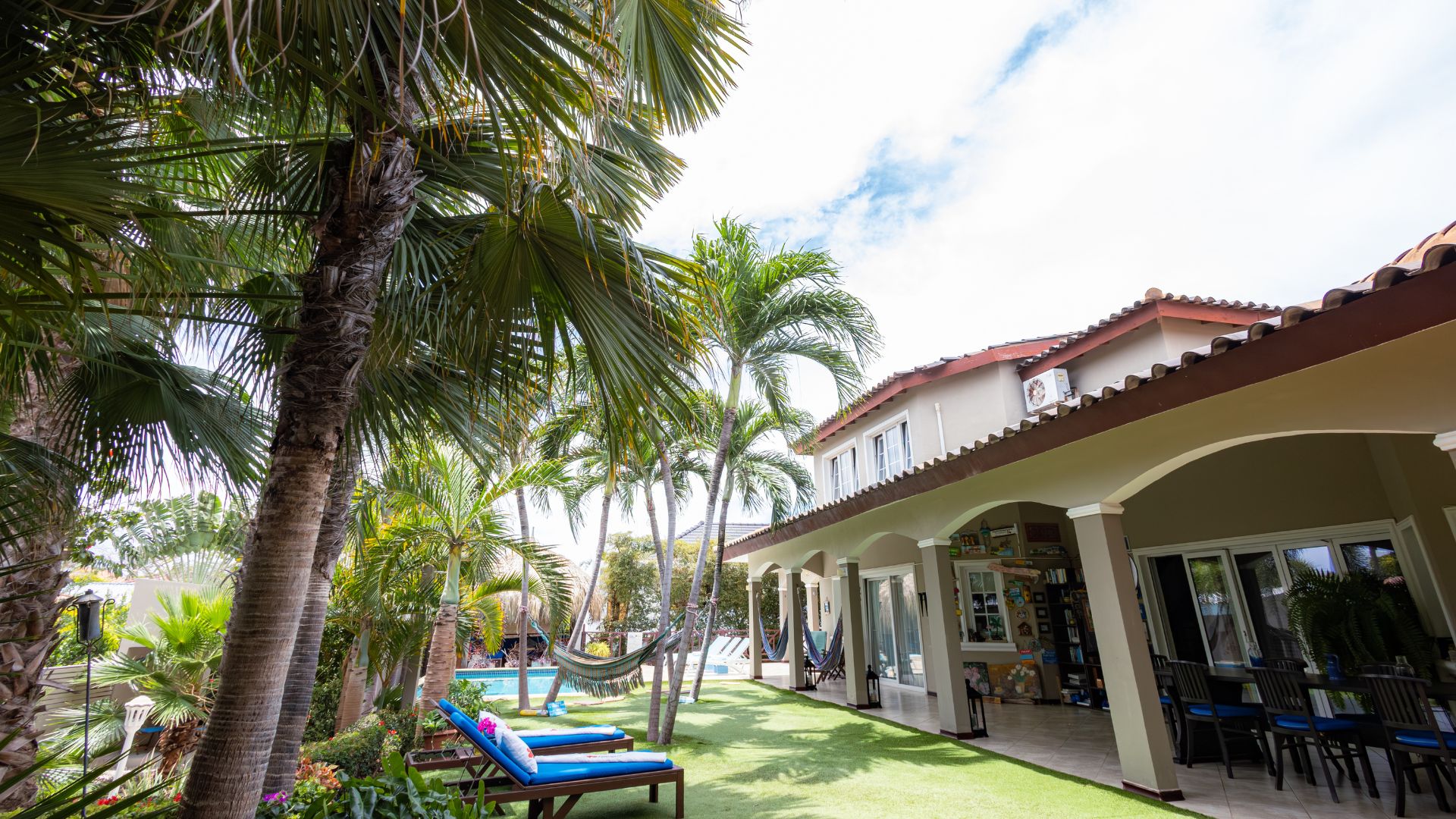
Hibiscus Beach House is a small adults-only bed & breakfast in Jan Thiel, five minutes on foot from the beach, run by Diana and Martin with their son Daniel.
- Adults only, six rooms and studios
- Five minutes on foot to Jan Thiel Beach
- Pool and tropical garden
- Breakfast included with the rooms
- Airport pickup, car rental and excursions arranged for you
Frequently asked questions about a first trip to Curaçao
In short
Fill in the DI Card, bring an adapter and some dollars in cash, rent a car for part of the week, and do not try to see the whole island in three days. Curaçao rewards a slower week more than a packed one.